Spike Protein and Alzheimer's: The Spike Amyloid Cross-Seeding Study
English Narration
At-Home Blood Spot • 6K Video Microscopy • $160
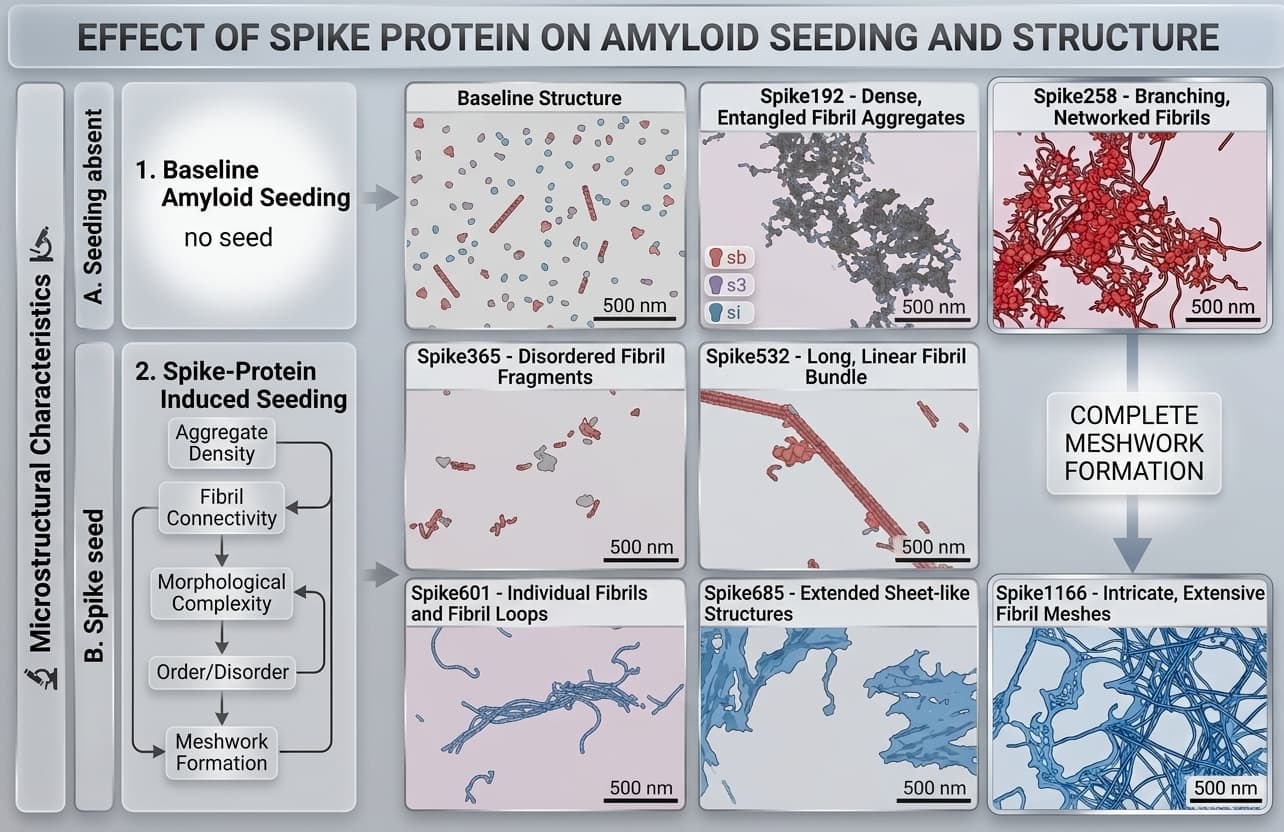
Short answer
In test-tube experiments, a Linköping University team found that amyloid fibrils made from SARS-CoV-2 spike protein fragments sped up misfolding of human prion protein (linked to Creutzfeldt-Jakob disease) and amyloid-beta (linked to Alzheimer's). The effect was selective: most control amyloids didn't do it. The work is an unreviewed preprint with no animal or human data, so it suggests a mechanism, not a cause.
Key takeaways
- 1Spike protein can form amyloid after it's cut by neutrophil elastase, an enzyme released in large amounts during COVID-19 inflammation.
- 2In vitro, spike amyloid seeds cut the lag time of human prion protein fibril formation by almost 80% (Spike532 at a 10% seed ratio).
- 3All seven spike peptide amyloids sped up amyloid-beta 1-42 fibril formation, while insulin, lysozyme and transthyretin controls did not.
- 4Different spike fragments preferred different targets: Spike532 for prion protein, Spike601 for amyloid-beta.
- 5The study is a preprint done entirely in purified proteins, so it can't show that this happens in the human brain.
This guide is for anyone who's seen headlines linking COVID-19 to Alzheimer's or Creutzfeldt-Jakob disease (CJD) and wants to know what the lab evidence actually says. It walks through a 2023 Linköping University study on spike protein amyloid "cross-seeding", what it found, and where the evidence stops. By the end you'll be able to separate what the experiments showed from what still needs proof in people.
What did the spike amyloid cross-seeding study find?
The paper is SARS-CoV-2 Spike amyloid fibrils specifically and selectively accelerates amyloid fibril formation of human prion protein and the amyloid β peptide by Larsson, Hellstrand, Hammarström and Nyström at Linköping University in Sweden. It was posted as a preprint on September 1, 2023.
The team had already shown in 2022 that neutrophil elastase can cut spike protein into fragments that form amyloid (Nyström & Hammarström, JACS). We cover that earlier work in our guide to how neutrophil elastase turns spike protein into amyloid. The new question was simple: once spike amyloid exists, does it do anything to the human proteins behind neurodegenerative disease?
In the test tube, it did. Spike amyloid seeds sped up the misfolding of human prion protein (HuPrP, linked to CJD) by up to almost 80%, and they sped up amyloid-beta 1-42 (linked to Alzheimer's) too.
The authors keep three levels separate, and so will we:
- what the experiments demonstrated
- what the authors reasonably infer
- what still needs clinical confirmation
Why would spike protein matter for Alzheimer's and prion disease?
Two lines of evidence pushed the team to ask the question. The first is clinical. Several case reports describe CJD, a rapidly fatal prion disease, appearing around the time of COVID-19 infection or vaccination (Young et al., 2020; Bernardini et al., 2022).
A study of over 6 million US adults found COVID-19 was linked to a 1.69-fold higher risk of a new Alzheimer's diagnosis within 360 days in people over 65 (Wang et al., 2022). Post-mortem work has found amyloid-beta deposits in the brains of young COVID-19 patients (Priemer et al., 2022), and UK Biobank imaging showed brain changes after infection (Douaud et al., 2022).
The second line is lab plausibility. Spike protein forms amyloid when neutrophil elastase cleaves it, and that enzyme is abundant in COVID-19 inflammation. So the spike-to-amyloid step only needs spike protein plus the inflammatory setting the infection creates.
What was missing was the next link: does spike amyloid affect human disease proteins at all? This paper tests that link.
What is amyloid cross-seeding?
When a protein misfolds into amyloid, it can act as a template. Other copies of the same protein that bump into it can be pushed into the same wrong shape. That's called seeding.
When the seed and the target are the same protein, it's homologous seeding. When the seed is a different protein, say spike amyloid added to human prion protein, it's heterologous seeding or cross-seeding.
Cross-seeding usually works poorly. Most foreign amyloid seeds don't speed up prion protein misfolding (Gallardo et al., 2016; Nyström & Hammarström, 2015). So if spike amyloid does it, that's unusual.
A simple way to picture it
Think of a misfolded protein as a bent key. Put it next to a straight one and the straight key can slowly bend to match. A bent key made of the same metal is a near-perfect template, while one made of a different metal usually isn't.
This paper asks whether the spike "key" bends the prion "key" anyway, and the answer in the test tube was yes, selectively.
What exactly did the researchers test?
They used seven 20-amino-acid peptides from the Wuhan-strain spike protein, all previously flagged as amyloid-prone. Each was turned into amyloid fibrils and added as a seed to two human proteins.
| Target protein | Linked disease | Concentration |
|---|---|---|
| HuPrP (human prion protein, residues 90-231) | Creutzfeldt-Jakob disease | 5 μM |
| Aβ1-42 (amyloid-beta peptide) | Alzheimer's disease | 5 μM |
The seven spike peptides are named for their starting position in the 1,273-amino-acid spike protein:
| Spike peptide | Amino acid sequence |
|---|---|
| Spike192 | FVFKNIDGYFKIYSKHTPIN |
| Spike258 | WTAGAAAYYVGYLQPRTFLLK |
| Spike365 | KKKGGGYSVLYNSASFSTFK |
| Spike532 | NLVKNKCVNFNFNGLTGTGV |
| Spike601 | GTNTSNQVAVLYQDVNCTEV |
| Spike685 | KKKRSVASQSIIAYTMSLGA |
| Spike1166 | LGDISGINASVVNIQKEIDR |
Fibril growth was tracked with Thioflavin T (ThT), the fluorescent dye that lights up beta-sheet amyloid. If you want to know how ThT and related methods detect fibrils, our amyloid fibril test guide explains it.
Spike amyloid and human prion protein
The headline result
At a 10% seed ratio (0.01 mg/ml seed in 0.1 mg/ml HuPrP), six of the seven spike amyloids sped up prion protein fibril formation. Spike192 was the only one with no effect.
Spike532 stood out. It shortened the lag time of HuPrP fibril formation by almost 80%, from a median of 712 minutes unseeded to a median of 135 minutes.
In plain terms, prion protein normally takes about 12 hours to start clumping in this assay. With Spike532 added, it started in just over 2 hours.
Not every spike fragment behaves the same
Seeding strength varied a lot. Spike532 was strongest, Spike192 did nothing, and the other five fell in between. That spread is itself a sign of specificity: a generic "any amyloid speeds up any amyloid" effect would look similar across all seven.
Does the effect depend on dose?
Yes. Diluting the seeds tenfold, to a 1% ratio, almost wiped out seeding for most peptides. Spike532 still had a small but significant effect, cutting lag time from a median of 397 minutes to 360 minutes. A dose-response pattern like this points to a real molecular interaction rather than an artifact.
Control amyloids mostly didn't do it
To check whether any amyloid would work, the team added well-known control amyloid seeds to the same HuPrP reaction.
| Control seed | Effect on HuPrP fibril formation |
|---|---|
| Insulin fibrils | Moderate decrease in lag time |
| Lysozyme fibrils | No significant effect |
| Transthyretin (TTR) fibrils | No significant effect |
| Aβ1-42 fibrils | No significant effect |
| HuPrP self-seed (positive control) | Strong decrease in lag time |
| Spike mix (all 7 fibrillated together) | Small but significant decrease |
Three of the four disease-linked control amyloids failed to seed prion protein, while spike amyloids succeeded. That's the paper's most important specificity check.
Next step
Concerned about neurological symptoms after COVID-19 or vaccination?
Explore screening options and discuss findings with a qualified clinician.
See the at-home testDoes spike amyloid speed up amyloid-beta, the Alzheimer's protein?
It did in this assay. All seven spike amyloids clearly sped up Aβ1-42 fibril formation, which is notable because unseeded Aβ1-42 already aggregates quickly.
The best seed for amyloid-beta wasn't the best seed for prion protein:
| Target protein | Most effective spike seed |
|---|---|
| HuPrP (prion, CJD) | Spike532 (NLVKNKCVNFNFNGLTGTGV) |
| Aβ1-42 (Alzheimer's) | Spike601 (GTNTSNQVAVLYQDVNCTEV) |
The authors call this substrate-dependent selectivity. Picture the spike protein as a keychain: one key fits the prion lock best, and a different key fits the amyloid-beta lock best.
Controls and electron microscopy
As with prion protein, insulin, lysozyme and TTR amyloids didn't speed up Aβ1-42. Only spike seeds and the amyloid-beta self-seed worked.
The team also pulled samples at 120 minutes, when the seeded reactions were growing fast and the unseeded one wasn't, and imaged them with transmission electron microscopy. Unseeded samples showed small oligomers but no fibrils. Every spike-seeded sample showed clear amyloid fibrils, so the result isn't just a dye artifact.
Why do some spike fragments work better than others?
The authors don't give a definitive structural answer. They point to earlier work showing that cross-seeding depends on amino acid complementarity and how well the amyloid backbones line up (Morales et al., 2013).
Put simply, the shape and charge pattern on the spike amyloid surface has to match the human protein it's templating. Some spike fragments fit prion protein better, others fit amyloid-beta, and some fit neither. Cross-seeding isn't automatic; it depends on molecular fit.
What could this mean for COVID-19 and the brain?
The proposed spike-to-amyloid chain
- Spike protein is present, from infection or vaccination. Brogna and colleagues reported vaccine-derived spike protein in blood samples from 50% of the vaccinated people they studied, between 67 and 187 days after vaccination (Brogna et al., 2023). Our guide to spike protein persistence testing covers how spike is measured and why antibody tests can't tell you this.
- Inflammation supplies the cutting enzyme. COVID-19 drives neutrophil elastase release, and that enzyme cuts spike into amyloid-prone fragments.
- Spike forms amyloid. Under those conditions, fragments convert into amyloid fibrils.
- Spike amyloid cross-seeds human proteins. This is the new step: in vitro, it sped up prion protein and amyloid-beta misfolding.
Steps 1 to 3 also connect to blood clotting. Spike amyloid fibrils have been shown to impair fibrin formation and breakdown, which we cover in spike protein amyloid fibrils and fibrinolysis.
The prion connection
Prion diseases are unusual because the misfolded protein (PrP^Sc^) is transmissible and converts normal PrP^C^ into the disease form. The authors note that prions are still the only protein with an undisputed capacity for transmission between individuals.
If spike amyloid can seed human prion protein, a viral protein could in theory kick off a self-sustaining prion cascade. That isn't proven in humans. For a broader look at the "prion-like" label and how a 2026 review extends the idea to tau, see our explainer on whether spike protein is a prion.
The Alzheimer's connection
Amyloid-beta isn't considered infectious, but it can be seeded. Jaunmuktane and colleagues reported Alzheimer's-type brain changes three decades after amyloid-beta was accidentally transmitted during medical treatment (Jaunmuktane et al., 2021). If an accidental seed can cause pathology decades later, a spike-derived seed could in theory do the same, but proving that would take long-term studies.
There's also a clinical clue. Early in the pandemic, Ziff and colleagues found that COVID-19 patients with neurological symptoms had shifts in their cerebrospinal fluid amyloid-beta processing (Ziff et al., 2022). They didn't offer a molecular explanation, and this preprint suggests one candidate.
Interestingly, amyloid-beta may not be purely a waste product. A body of research suggests it acts as an antimicrobial peptide, which we explain in amyloid-beta as immune defense.
Viruses and neurodegeneration more broadly
The authors place their results in a bigger pattern. A study of about 800,000 people in Finnish and UK biobanks linked common viral infections, such as influenza and shingles, to higher risk of Alzheimer's and Parkinson's disease (Levine et al., 2023). Hammarström and Nyström have reviewed how many viruses interact with amyloid (Prion, 2023). Their argument is that viral amyloids may be an underrated trigger, and SARS-CoV-2 is the largest-scale example.
What the study does not show
- No animal or human data. Every experiment used purified proteins in test tubes.
- No proof of causation. It offers a mechanism, not proof that this explains CJD or Alzheimer's cases.
- No measure of clinical risk. We don't know how many spike-exposed people, if any, would develop cross-seeding, or at what level it would matter.
- No treatments tested. It identifies a possible problem, not a solution.
These limits don't cancel the findings. They show where the science is and where it needs to go next.
Why it changes the questions researchers ask
The usual explanation for brain symptoms after COVID-19 is neuroinflammation. That's real, but it's broad: it says the brain is inflamed without naming the molecular pathway doing damage.
Cross-seeding is more specific. It names a culprit (spike amyloid), targets (prion protein and amyloid-beta) and a mechanism (templated misfolding). If it holds up clinically, it could help identify who's most at risk, which tests to use (such as RT-QuIC prion seeding assays or amyloid PET), and which strategies might interrupt the cascade.
Can an amyloid test detect this?
This is where people often get confused, because "amyloid test" means different things. Alzheimer's testing looks for brain amyloid-beta plaques with PET scans, spinal fluid, or plasma amyloid-beta 42/40 and p-tau blood tests. Prion disease is assessed with tools like RT-QuIC. Our guide to the types of amyloid tests compares them side by side, including how they differ from fibrin amyloid microscopy.
Our at-home amyloid test is a different kind of test. It uses Thioflavin T fluorescence microscopy on a dried blood sample to look at fibrin amyloid microclots, the clotting-related amyloid described in the fibrin amyloid microclot research. It isn't an Alzheimer's test, it doesn't detect brain plaques or prion disease, and it doesn't measure spike protein. It's not a diagnostic test; a qualified clinician should interpret any result.
The bottom line
In vitro, spike protein amyloid sped up the misfolding of human prion protein and Alzheimer's-linked amyloid-beta. The effect was selective, dose-dependent and not shared by most control amyloids. That makes it a testable mechanism that could help explain clinical reports linking COVID-19 to neurodegeneration.
It's also an unreviewed preprint done entirely in test tubes. In 2022 this group showed spike can form amyloid; in 2023 they showed what spike amyloid can do to human proteins in a dish. Whether it happens in the human brain is the question that matters most, and it's still open.
This article is educational and discusses preclinical laboratory research. It doesn't establish causation in humans or replace care from a qualified clinician.
Frequently asked questions
Does COVID-19 cause Alzheimer's disease?
That hasn't been shown. A large US records study found people over 65 had about a 1.69-fold higher risk of a new Alzheimer's diagnosis within a year of COVID-19, and the Linköping preprint offers one possible mechanism. But association isn't causation, and the cross-seeding experiments were done in test tubes. Long-term studies in people are still needed.
Can spike protein cause prion disease like Creutzfeldt-Jakob disease?
There's no proof it does. Case reports describe CJD appearing around the time of COVID-19 infection or vaccination, and spike amyloid sped up prion protein misfolding in a test tube. Case reports can't show cause, and nobody has shown spike-seeded prion disease in an animal or a person. It's a hypothesis worth testing, not an established risk.
Has the spike amyloid cross-seeding study been peer reviewed?
As of October 2026 the Larsson, Hellstrand, Hammarström and Nyström paper is listed on bioRxiv as a preprint posted September 1, 2023. The same group's earlier work showing spike protein forms amyloid after neutrophil elastase cleavage was peer reviewed and published in the Journal of the American Chemical Society in 2022.
Can a blood test show spike amyloid in the brain?
No current blood test does that. Alzheimer's blood tests measure plasma amyloid-beta 42/40 ratios or p-tau, and prion disease is assessed with tests like RT-QuIC on spinal fluid. Fibrin amyloid microclot tests look at clotting proteins in blood. None of them detects spike amyloid seeding in brain tissue.
Sources
- SARS-CoV-2 Spike amyloid fibrils specifically and selectively accelerates amyloid fibril formation of human prion protein and the amyloid β peptide (preprint). bioRxiv, 2023
- Amyloidogenesis of SARS-CoV-2 Spike Protein. Journal of the American Chemical Society, 2022
- Viruses and amyloids: a vicious liaison. Prion, 2023
- Detection of recombinant Spike protein in the blood of individuals vaccinated against SARS-CoV-2: Possible molecular mechanisms. Proteomics Clinical Applications, 2023
- Creutzfeldt-Jakob disease in a man with COVID-19: SARS-CoV-2-accelerated neurodegeneration?. Brain, Behavior, and Immunity, 2020
- Creutzfeldt-Jakob disease after COVID-19: infection-induced prion protein misfolding? A case report. Prion, 2022
- Association of COVID-19 with New-Onset Alzheimer's Disease. Journal of Alzheimer's Disease, 2022
- SARS-CoV-2 is associated with changes in brain structure in UK Biobank. Nature, 2022
- Amyloid processing in COVID-19-associated neurological syndromes. Journal of Neurochemistry, 2022
- Virus exposure and neurodegenerative disease risk across national biobanks. Neuron, 2023
- Alzheimer's disease neuropathological change three decades after iatrogenic amyloid-β transmission. Acta Neuropathologica, 2021
- Aβ Deposits in the Neocortex of Adult and Infant Hypoxic Brains, Including in Cases of COVID-19. Journal of Neuropathology & Experimental Neurology, 2022
- De novo design of a biologically active amyloid. Science, 2016
- Generic amyloidogenicity of mammalian prion proteins from species susceptible and resistant to prions. Scientific Reports, 2015
- Cross-Seeding of Misfolded Proteins: Implications for Etiology and Pathogenesis of Protein Misfolding Diseases. PLoS Pathogens, 2013
At-Home Amyloid Test
Concerned about neurological symptoms after COVID-19 or vaccination?
Explore screening options and discuss findings with a qualified clinician.
Next steps
- Types of Amyloid Tests: Blood Tests, PET, CSF, Biopsy and MicroclotsCompare the types of amyloid tests: Alzheimer's blood tests, amyloid PET, spinal fluid, amyloidosis biopsy and fibrin amyloid microclot microscopy.
- Spike Protein Amyloid Fibrils: How Spike685 Makes Clots Resist LysisHow spike protein amyloid fibrils change fibrin clots: what the 2025 Linköping study found for Spike601 and Spike685, and what it cannot yet tell us.
- Amyloid Fibril Test: Methods Used to Detect Amyloid FibrilsHow an amyloid fibril test works: Thioflavin T, Congo red, electron microscopy, X-ray diffraction and seeding assays compared, with which are clinical.

Tim Ottowitz
Founder & Research Lead
Tim Ottowitz founded Amyloid Test and writes its Science Hub, turning fibrin amyloid and spike protein research into plain-language guides that stay close to the published evidence.
Keep reading
Is Spike Protein a Prion? What a 2026 Prion-Like Domain Review Shows
Is spike protein a prion? A 2026 review links spike prion-like domains to amyloid-beta and tau cross-seeding. Here's what's proven and what isn't yet.
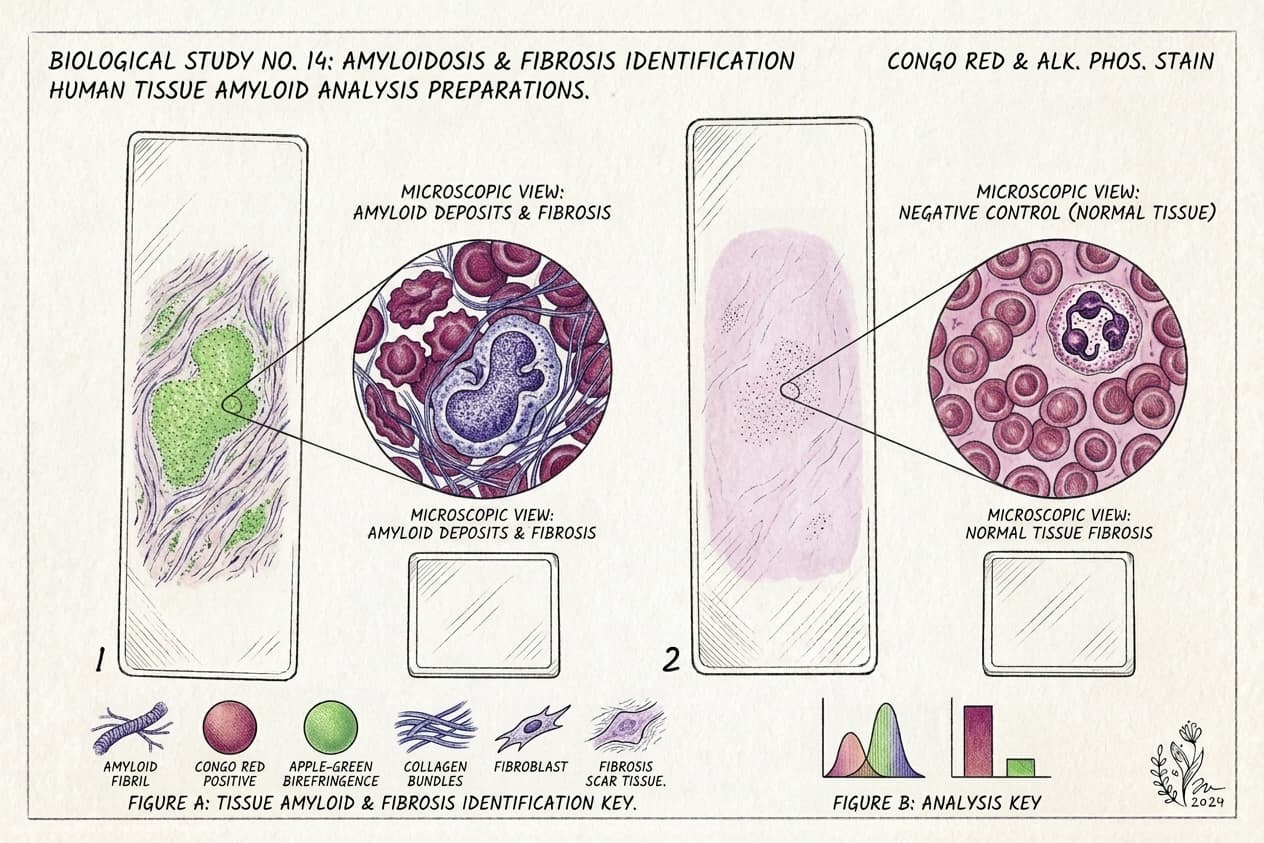
Amyloid-Beta Antimicrobial Peptide: Amyloid as an Immune Defense
Is amyloid-beta an antimicrobial peptide? How amyloid works as immune defense, what Meytal Landau's lab showed, and where spike protein fits in.
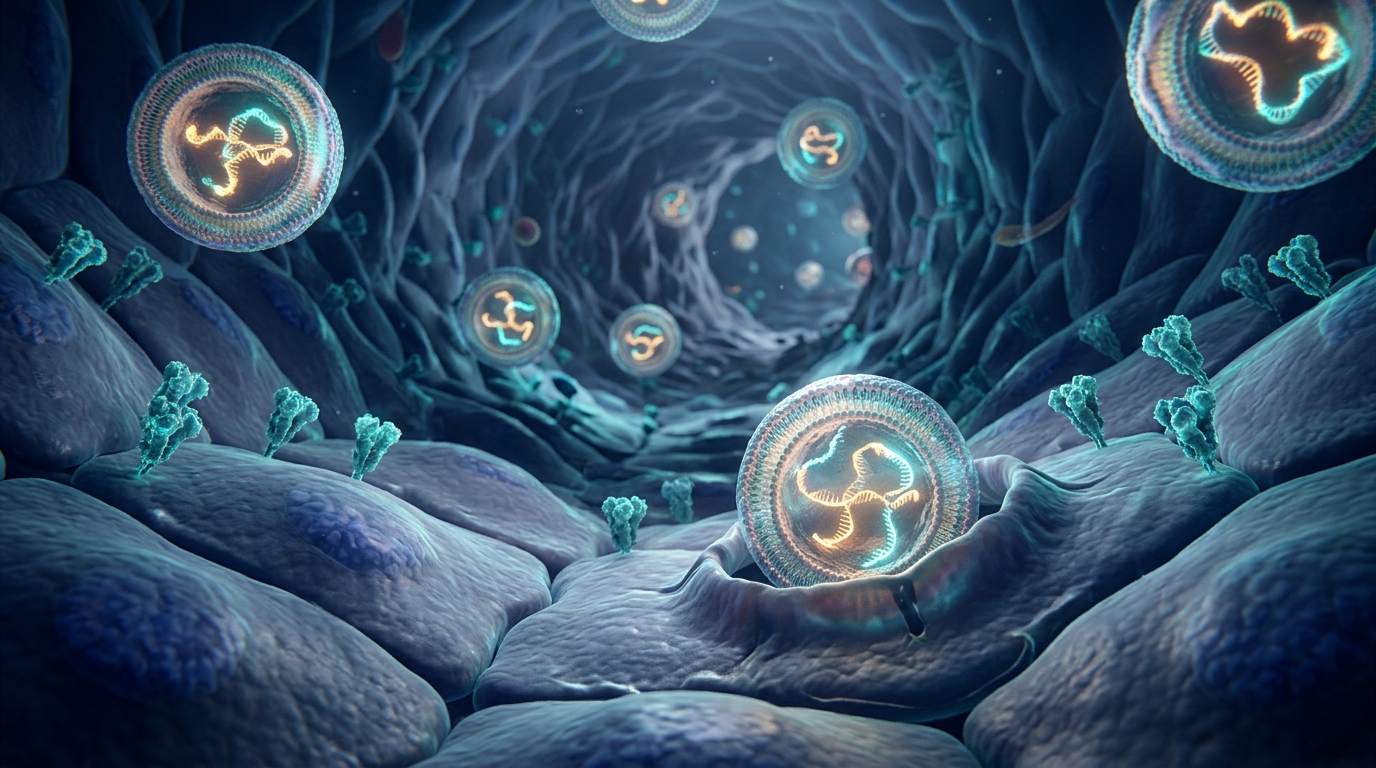
Lipid Nanoparticle Biodistribution: Where mRNA Goes in the Body
A plain-English guide to lipid nanoparticle biodistribution research, showing how whole-body imaging tracks mRNA delivery to heart capillaries.