DNase and NET Clearance in Long COVID: Why Microclots May Persist
English Narration
At-Home Blood Spot • 6K Video Microscopy • $160
Short answer
DNases are enzymes that digest the DNA backbone of neutrophil extracellular traps (NETs). Hospital studies found lower DNase activity in COVID-19 plasma, so NETs lingered and kept activating clotting factor XII. Adding DNase in the lab restored NET breakdown. Whether DNase stays low in Long COVID, or whether DNase treatment helps patients, hasn't been tested yet.
Key takeaways
- 1DNase I and DNase1L3 are the main blood enzymes that break down the DNA backbone of NETs.
- 2In 43 hospitalized COVID-19 patients, plasma DNase activity and NET breakdown were lower than in 39 healthy donors.
- 3NETs activated clotting factor XII, and adding DNase I in the lab cut that activation by about half.
- 4A 2024 study linked lower DNase levels to more severe COVID-19, with DNASE1 gene variants playing a part.
- 5Most data come from acute COVID-19; DNase in Long COVID and DNase treatment for microclots are untested.
Most microclot research in Long COVID asks what these clots are made of and how they form. A quieter question matters just as much: why doesn't the body clear them? This guide covers research on DNases, the enzymes that digest neutrophil extracellular traps (NETs), and what reduced DNase activity might mean for microclots that linger.
Does COVID-19 lower DNase activity?
In hospitalized patients, yes. The key study is Englert, Rangaswamy, Deppermann and colleagues, Defective NET clearance contributes to sustained FXII activation in COVID-19-associated pulmonary thrombo-inflammation, published in EBioMedicine in 2021.
They found:
- DNase activity was lower in COVID-19 plasma than in healthy donor plasma
- COVID-19 plasma couldn't break down NETs the way healthy plasma did
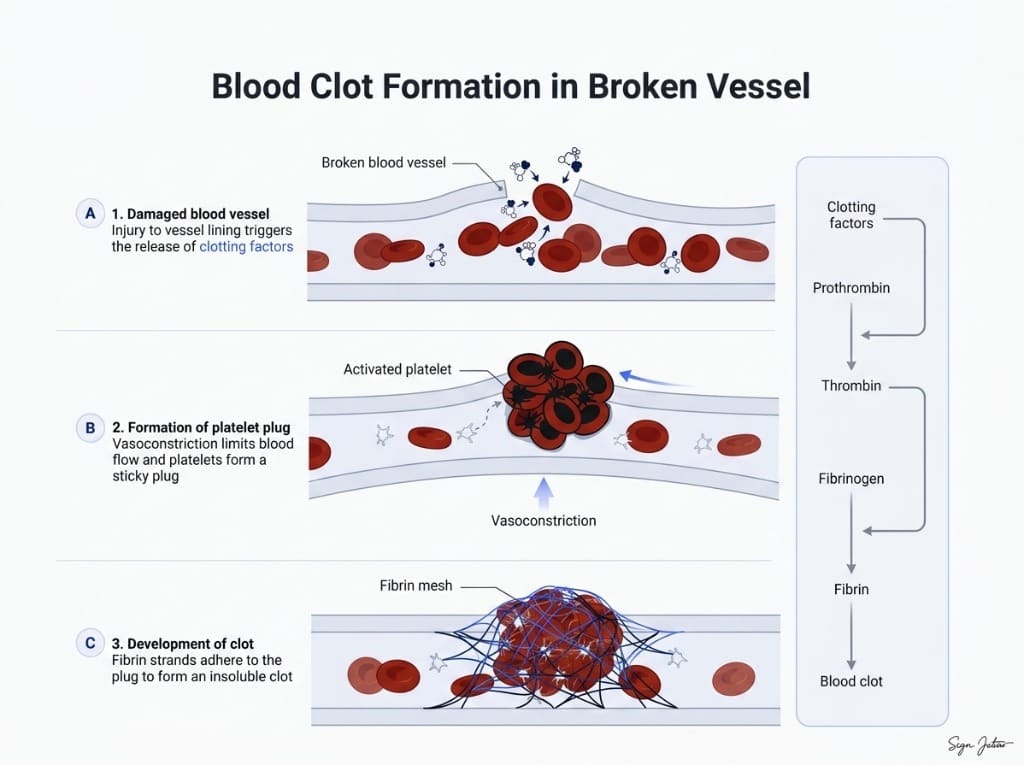
- NETs activated coagulation factor XII (FXII), which starts the contact pathway of clotting
- adding DNase I restored NET breakdown and reduced FXII activation in the lab
A 2024 French study added detail: functional DNase levels were lowest in the sickest patients, creating an imbalance between NET formation and NET clearance (Garcia et al., 2024).
This doesn't explain all Long COVID. These studies looked at acute illness, and they point to one pathway that may matter in a subset of patients.
Start with the vocabulary
What are DNases?
DNases (deoxyribonucleases) are enzymes that cut DNA. Two matter most for NETs in blood:
- DNase I: the main enzyme that digests free DNA in blood and tissues
- DNase1L3: a related enzyme, made largely by immune cells including plasmacytoid dendritic cells, that's especially good at digesting DNA packaged with proteins
When NETs are released, these enzymes break down the DNA scaffold that holds the traps together.
What are NETs?
Neutrophils, a kind of white blood cell, can throw out sticky webs of their own DNA studded with enzymes to trap microbes. Those webs are NETs. They help in infection but cause damage when there are too many or they aren't cleared. Our walkthrough of microclots and NETs in Long COVID shows how NET material has been found inside microclots.
What happens when DNase activity is low?
- NET DNA lasts longer than it should.
- The DNA scaffold stays intact, giving clots something to build on.
- Negatively charged DNA activates FXII.
- Clotting continues without the normal brake of NET clearance.
Where does factor XII come in?
FXII starts the contact activation pathway, part of the intrinsic clotting cascade. The negatively charged surface of DNA-rich NETs is an ideal place for FXII to switch on. When NETs pile up, they can keep FXII active and turn a normal immune response into immunothrombosis, the combined immune-and-clotting response. A 2025 review covers the contact pathway's wider role in COVID-19 clotting (Capecchi et al., 2025).
Next step
Concerned about persistent microclots?
Our at-home amyloid fibrin test looks for fibrin amyloid microclots that standard clotting tests aren't designed to find. Review the report with your doctor.
See the at-home testWhat did the Englert study measure?
The 2021 study compared plasma from:
- 43 hospitalized COVID-19 patients
- 39 age- and sex-matched healthy donors
It measured:
- DNase activity, using two independent assays (the DNase Alert QC System and a single radial enzyme diffusion, or SRED, assay)
- how well plasma broke down NETs made in the lab
- FXII activation when NETs were present
The team also used proteomics and immunofluorescence on postmortem lung tissue from three COVID-19 patients and three controls to see where NETs and activated FXII sat.
Key findings from the Englert study
1. DNase activity was lower in COVID-19
Both assays showed reduced DNase activity in COVID-19 plasma compared with healthy donors. NET markers such as circulating DNA and myeloperoxidase were also higher in the patients.
2. COVID-19 plasma couldn't clear NETs
When lab-made NETs were incubated with plasma, healthy plasma and recombinant DNase I (Pulmozyme) fully degraded them within 3 hours. COVID-19 plasma didn't. The enzyme shortfall showed up as a real failure to clear NETs.
3. Adding DNase I cut FXII activation
NETs switched on purified FXII. Breaking the NETs down with DNase I reduced FXIIa formation by about half (51%), and an FXIIa inhibitor (rHA-infestin-4) blocked it completely. That points to NET DNA as an activating surface for FXII.
4. Activated FXII sat with NETs in lung tissue
In postmortem COVID-19 lungs, activated FXII was raised in lung tissue and blood vessels, and it overlapped with NET markers. Fibrin-rich deposits filled air spaces where FXII was high. Plasma FXIIa was also about 67% higher in a subset of COVID-19 patients than in controls.
The authors concluded that targeting both NETs and FXIIa may be a new treatment strategy, and they noted several clinical trials testing DNase in acute COVID-19.
A 2025 study looked at a different immune cell in infected lung tissue. SARS-CoV-2 turned lung macrophages into foam cells in humanized mice and macaques, and in the mice those foam cells carried pro-thrombotic genes and fibrin thrombi formed in the human lung tissue; see SARS-CoV-2 foam cells and fibrin thrombi.
Why does DNase activity drop in COVID-19?
The honest answer is that it's only partly known. The 2024 Garcia study found two concrete factors:
- Genetics: DNASE1 gene variants were linked to lower DNase I levels.
- Fewer DNase-making cells: critically ill patients had fewer plasmacytoid dendritic cells, the main source of DNase1L3, and those cells expressed less of it.
Other explanations are hypotheses:
- Consumption: during massive NET release, DNase may be used up faster than it's replaced.
- Inflammation: the intense inflammatory state of severe COVID-19 may change how enzymes are made and regulated.
- Viral interference: viral proteins might affect clearance directly, though this hasn't been shown.
Could dying infected cells add to the DNA load?
That's a reasonable question, though untested. In lab cultures, SARS-CoV-2-infected cells fuse into large multi-nucleated cells called syncytia (Merolli et al., 2022), one of the routes described in our explainer on SARS-CoV-2 cell-to-cell spread.
If such cells die and release their contents, they'd add DNA that also needs clearing. Combined with lower DNase activity, that would be a double hit. No study has measured this link directly, so treat it as a hypothesis.
Does DNase stay low in Long COVID?
We don't know yet. The Englert and Garcia studies looked at acute, hospitalized COVID-19. The link to Long COVID is an inference based on other findings: NET markers are raised in Long COVID, and NET material appears inside microclots (Thierry et al., 2025).
If clearance stays impaired, several things could keep the cycle going:
- leftover viral material driving immune activation
- lasting damage to the cells that produce or regulate DNase
- autoimmune responses against NET components
- fibrin wrapping NETs, making them harder for DNase to reach
The proposed loop: impaired clearance, NET build-up, FXII activation, more inflammation and clotting, and more NET release. Fibrin amyloid microclots also resist the body's normal clot-busting enzymes (Kell et al., 2022), so the two problems could add up. Our pillar on amyloid microclots and Long COVID explains the fibrin side.
Can DNase treatment clear microclots?
Dornase alfa (Pulmozyme)
DNase I is already approved as dornase alfa for cystic fibrosis, inhaled to break down DNA in thick mucus. In principle, more DNase could restore NET clearance, reduce FXII activation and loosen NET DNA inside microclots.
The problems are real:
- the safety and dosing of systemic DNase in Long COVID aren't established
- DNase I is a large protein, so it wouldn't survive being swallowed
- inhaled DNase may not reach the bloodstream in useful amounts
- off-label use is costly and hard to access
Other approaches being discussed
Researchers have proposed other strategies, none proven for Long COVID microclots:
- fibrinolytic enzymes such as nattokinase and lumbrokinase, which target fibrin rather than DNA; see our review of nattokinase and lumbrokinase for microclots
- FXII-targeting drugs, since NETs activate FXII
- neutrophil elastase inhibitors, to reduce NET formation upstream
- apheresis, which filters blood and has been tried in small, uncontrolled settings
What should patients know?
What's established and what isn't
Supported by studies:
- Hospitalized COVID-19 patients had lower DNase activity.
- That impaired NET clearance in the lab.
- NETs activated FXII.
- Adding DNase restored NET breakdown in the lab.
Still uncertain:
- what share of Long COVID patients, if any, have low DNase activity
- whether DNase treatment is safe and effective in Long COVID
- the right dose, route and duration if DNase is tried
- whether restoring DNase improves symptoms
Practical points
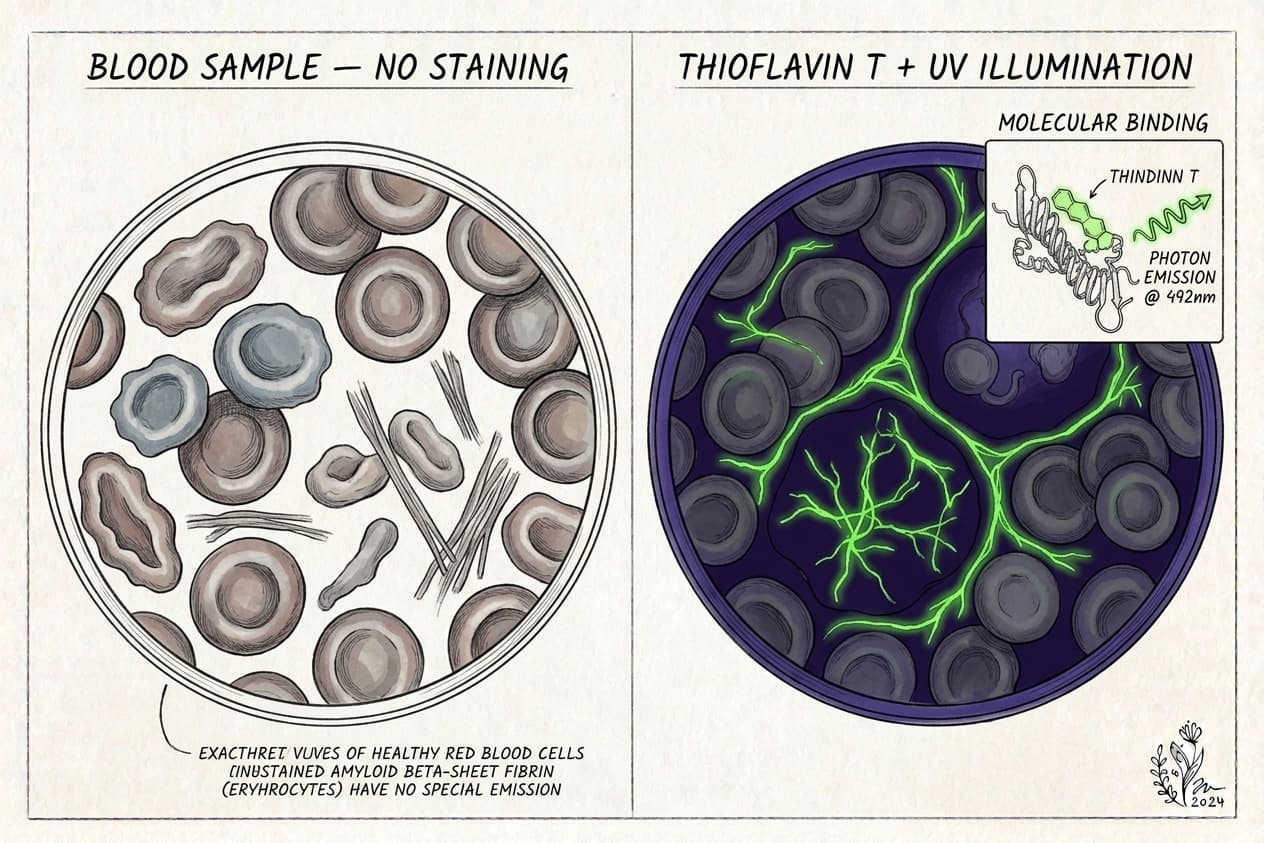
- Microclots can be imaged. Research labs use Thioflavin T fluorescence microscopy to see fibrin amyloid microclots, as explained in our amyloid fibrin test guide.
- NET-rich and fibrin-rich clots may behave differently. That's a working hypothesis, not a validated way to choose treatment.
- DNase therapy is experimental. It isn't standard care and should only happen under medical supervision, ideally in a trial.
- Combination approaches are being discussed, but none has been tested in controlled trials for Long COVID.
Our at-home amyloid test uses ThT fluorescence microscopy on a dried blood sample to look for fibrin amyloid microclots, and you can share the report with any healthcare provider. It doesn't measure DNase activity, NET markers, D-dimer or other clotting values, and it isn't a diagnosis. For clinicians who work with microclot findings, see our list of microclot testing labs and treatment centers.
The bottom line
In acute COVID-19, lower DNase activity lets NETs build up, and NETs keep clotting factor XII switched on. That's a coherent explanation for why immune-derived clot material might linger, and it fits with NET material found inside Long COVID microclots.
The open question is translation: does DNase stay low in Long COVID, and would restoring it help patients? Those studies haven't been done. For practical steps in the meantime, see the Long COVID survival guide.
This article is educational and doesn't diagnose illness or recommend treatment.
Frequently asked questions
What does DNase do in the blood?
DNase enzymes cut up DNA that's floating outside cells. In blood, DNase I and DNase1L3 do most of this work. That matters for neutrophil extracellular traps, because NETs are built on a DNA scaffold. When DNase activity is low, NETs and their fragments can linger and keep driving inflammation and clotting.
Is DNase used as a treatment for Long COVID?
Not as an established treatment. Dornase alfa (Pulmozyme) is an inhaled DNase I approved for cystic fibrosis. Several trials tested it in acute COVID-19, but there's no published evidence that DNase treatment improves Long COVID symptoms or clears microclots. Any use would be experimental and needs a physician's supervision.
Can you test your DNase activity?
DNase activity assays exist, but they're mainly research tools rather than routine clinical tests. Studies have used fluorescent substrate kits and gel-based single radial enzyme diffusion assays. If you're interested, ask a clinician or academic lab, since results aren't standardized and there's no agreed normal range for Long COVID.
Do supplements break down NETs?
There's no good human evidence that oral supplements digest NET DNA. Enzymes like nattokinase and lumbrokinase are studied for breaking down fibrin, the protein part of clots, not DNA. NET clearance in research has relied on DNase enzymes. Talk to a doctor before combining enzymes with blood thinners.
Sources
- Defective NET clearance contributes to sustained FXII activation in COVID-19-associated pulmonary thrombo-inflammation. EBioMedicine, 2021
- Impaired balance between neutrophil extracellular trap formation and degradation by DNases in COVID-19 disease. Journal of Translational Medicine, 2024
- Circulating Microclots Are Structurally Associated With Neutrophil Extracellular Traps and Their Amounts Are Elevated in Long COVID Patients. Journal of Medical Virology, 2025
- A central role for amyloid fibrin microclots in long COVID/PASC: origins and therapeutic implications. Biochemical Journal, 2022
- Involvement of the contact pathway in COVID-19 coagulopathy. Internal and Emergency Medicine, 2025
- An intra-cytoplasmic route for SARS-CoV-2 transmission unveiled by Helium-ion microscopy. Scientific Reports, 2022
At-Home Amyloid Test
Concerned about persistent microclots?
Our at-home amyloid fibrin test looks for fibrin amyloid microclots that standard clotting tests aren't designed to find. Review the report with your doctor.
Next steps
- Neutrophil Extracellular Traps in Long COVID: The Microclot-NET StudyA 2025 study found neutrophil extracellular traps tangled into microclots in Long COVID. What the paper measured, what it found, and what it can't prove.
- Amyloid-Beta Antimicrobial Peptide: Amyloid as an Immune DefenseIs amyloid-beta an antimicrobial peptide? How amyloid works as immune defense, what Meytal Landau's lab showed, and where spike protein fits in.
- What Are Microclots? A Plain-Language Guide to Amyloid MicroclotsWhat microclots are, how fibrin folds into amyloid microclots that resist breakdown, the symptoms researchers link to them, and how they're tested.

Tim Ottowitz
Founder & Research Lead
Tim Ottowitz founded Amyloid Test and writes its Science Hub, turning fibrin amyloid and spike protein research into plain-language guides that stay close to the published evidence.
Keep reading

SARS-CoV-2 Foam Cells: The 2025 Study on Lung Scarring and Clots
A 2025 Nature Microbiology study found SARS-CoV-2 turns lung macrophages into foam cells tied to scarring and clots. What it shows and what it can't prove.
Microclots Symptoms: Capillary Occlusion, Fatigue, and Dyspnea
Understand key microclots symptoms in blood and tissue. Learn why capillary hypoperfusion causes fatigue, brain fog, and breathlessness with normal labs.
Does Long COVID Show Up on Blood Tests? What Normal Results Miss
Why routine blood tests look normal in long COVID: amyloid fibrin microclots resist breakdown, spike forms amyloid fibrils, and panels miss both.